
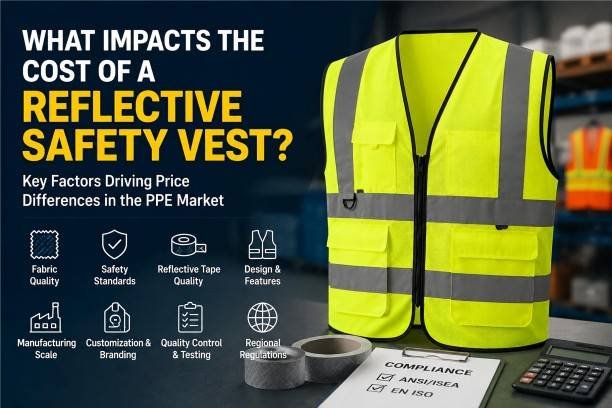
Reflective safety vests are among the most widely used pieces of personal protective equipment across construction, logistics, road work, and industrial manufacturing. At first glance, they may appear to be simple, standardized products. In reality, pricing varies significantly across markets, suppliers, and specifications—sometimes by more than 5–10x for what looks like a similar vest.
So what actually drives the cost?
1. Fabric Type and Base Material
The foundation of any safety vest is the base fabric, and this is one of the biggest cost drivers.
Low-cost vests typically use basic polyester mesh or tricot fabric. These materials are lightweight and breathable but offer limited durability under harsh working conditions.
Higher-end vests often use:
- Heavy-duty warp-knit polyester
- Anti-tear reinforced fabrics
- Moisture-wicking or UV-resistant textiles
As material performance increases, so does the cost—not just due to raw material pricing, but also due to more complex weaving and finishing processes.
2. Reflective Tape Quality and Certification
The reflective strips are not all the same.
Economy vests may use generic reflective tape that provides basic visibility but lacks certified performance standards. Premium vests often rely on high-grade microprismatic or glass bead reflective materials that meet strict safety standards such as ANSI/ISEA or EN ISO requirements.
Certified reflective tape significantly increases cost due to:
- Testing and compliance requirements
- Higher material precision
- Better long-distance reflectivity performance
In industrial procurement, certification alone can account for a noticeable price gap.
3. Safety Standards and Compliance Level
A vest intended for general warehouse use is not built to the same specification as one used in highway construction or railway maintenance.
Higher compliance levels (such as Class 2 or Class 3 visibility standards in ANSI systems) require:
- Wider reflective coverage
- More fluorescent background material
- Specific garment design requirements
Meeting these standards increases material usage and manufacturing complexity, which directly raises production costs.
4. Design Complexity and Functional Features
Basic vests are essentially single-layer garments with minimal stitching. However, modern industrial vests often include multiple functional elements such as:
- Multi-pocket tool storage systems
- ID badge holders
- Zipper or Velcro closures
- Radio loops or reinforced seams
Each additional feature adds:
- More labor time in production
- Extra materials and accessories
- Higher defect control requirements
In large-scale manufacturing, even small design upgrades can significantly affect unit pricing.
5. Manufacturing Scale and Supply Chain Efficiency
Order volume plays a major role in pricing.
Large-volume OEM or B2B orders benefit from:
- Lower per-unit material procurement costs
- Optimized production line efficiency
- Reduced packaging and logistics overhead per unit
Smaller batches, especially customized orders, tend to carry higher per-unit costs due to setup time and lower economies of scale.
6. Customization and Branding Requirements
Customization is another key price variable. Common requests include:
- Printed or heat-transferred logos
- Company-specific color matching
- Custom labeling and packaging
- Multi-language safety labeling
Each customization step introduces additional production stages, color matching controls, and quality checks, which all increase cost.
7. Quality Control and Durability Testing
Industrial buyers increasingly demand long service life and consistent performance. Manufacturers may conduct:
- Tensile strength testing
- Reflectivity degradation testing
- Wash durability testing (for reusable vests)
Stricter QC processes reduce production efficiency but improve reliability—adding to overall cost.
8. Regulatory and Market Differences by Region
Finally, geography matters. Vests produced for North American or European markets often require stricter compliance documentation compared to those sold in less regulated regions. This impacts:
- Testing costs
- Documentation and certification fees
- Product liability insurance considerations
Final Thoughts
The price of a reflective safety vest is not determined by a single factor, but by a layered combination of materials, compliance requirements, functionality, and production scale.
For procurement teams, understanding these variables is critical. A lower-cost vest may meet basic visibility needs, but may not comply with workplace safety standards or withstand long-term industrial use. On the other hand, higher-priced options often reflect certified protection, better durability, and lower replacement frequency.
In PPE sourcing, the real question is rarely “why is this vest more expensive?”—but rather “what level of risk and performance am I paying for?”