
by Haoxin Safety
Share
by Haoxin Safety
Share
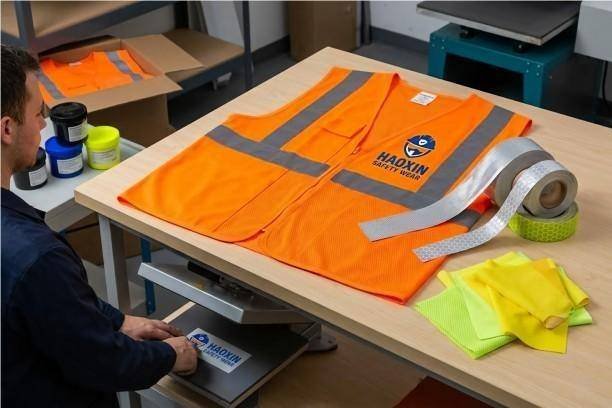
Customizing high-visibility safety vests is more than just slapping a logo on a piece of bright fabric. For distributor brands, safety equipment suppliers, and commercial buyers, a well-built vest serves as a mobile billboard while meeting strict job-site compliance standards.
When creating custom safety vests for your brand or client inventory, every detail matters—from fabric durability to print longevity. Here is a practical breakdown of how to choose the right materials, reflective tapes, and branding methods for your order.
1. Selecting the Right Base Fabric
The environment where the vest will be used dictates the material you should specify. Choose fabric based on climate, wear rate, and functional needs:
-
Polyester Tricot (Solid Fabric): Smooth, durable, and structurally stable. It provides a clean, crisp surface for high-resolution logo printing. Best for general construction, site managers, and cooler weather.
-
Polyester Mesh: Lightweight and breathable. Excellent for hot climates, summer outdoor work, and physical jobs where airflow is critical. Screen printing on mesh requires careful ink handling to maintain logo clarity.
-
Flame-Resistant (FR) Treated Fabrics: Required for oil & gas, utilities, and electrical work. Always verify that the base material matches the required hazard rating (e.g., NFPA 2112 or ASTM F1506).
-
Heavy-Duty Canvas or Oxford Cloth: Used for premium multi-pocket surveyor vests. Higher denier fabrics (like 300D or 600D) extend product lifespan in rugged environments.
2. Choosing the Reflective Tape
Reflective tape provides nighttime visibility and ensures compliance with ANSI/ISEA 107 (US) or EN ISO 20471 (EU) standards.
-
Standard Glass Bead Sew-On Tape: The traditional, cost-effective choice. Works well for standard daily-use vests.
-
High-Gloss PVC Reflective Tape: Features a smooth outer film that resists water and dirt. Ideal for wet environments and easy to wipe clean.
-
Heat Transfer Reflective Tape: Applied seamlessly without stitching lines, giving garments a modern, streamlined look. Great for lightweight mesh vests.
-
Segmented / Patterned Reflective Tape: Flexible and breathable. It bends naturally with body movement without cracking, making it a popular choice for active wearers.
3. Selecting the Best Printing Method for Your Logo
The right printing technique depends on your logo’s design, placement, and batch size:
-
Screen Printing: The industry standard for bulk orders. Works best for 1-to-3 color solid logos. Cost-effective, bold, and highly durable under industrial wash conditions.
-
Heat Transfer Printing: Best for complex, multi-color logos, fine text, or gradient artwork. Offers sharp detail and quick setup for smaller production runs.
-
Reflective Printing: Uses reflective ink or cut reflective vinyl to make the brand logo shine under direct light at night. Excellent for adding an extra safety layer.
-
Direct-to-Film (DTF): Delivers vibrant colors and holds up well on textured fabrics. Ideal for detailed branding without high setup fees on medium-sized batches.
-
Custom Woven Labels & Rubber Patches: Adds a premium finish to high-end surveyor vests, usually sewn on chest pockets or hem tags for subtle branding.
4. Pocket Configuration and Hardware Options
Branding goes beyond logos—functional customization adds real user value:
-
Pockets: Add clear ID badge holders, mic tabs, radio pockets, pen slots, or tablet-sized zippered lower pockets.
-
Closures: Heavy-duty resin zippers hold up better over time, while quick-release hook-and-loop (Velcro) or breakaway snaps provide snag protection around machinery.
Get a Custom Mockup & Wholesale Quotation
We help importers, safety distributors, and commercial buyers design and produce compliant, branded high-visibility workwear tailored to market specifications.
-
Free Digital Proofs: Send us your vector logo for a 24-hour visual mockup.
-
Flexible OEM/ODM Customization: Custom colors, labels, packaging, and pocket layouts.
-
Certified Compliance: Fabric and tape options compliant with ANSI/ISEA 107 and EN ISO 20471.
Contact our sales team today to request a physical sample kit or a custom production quote for your next order.