
by Haoxin Safety
Share
by Haoxin Safety
Share
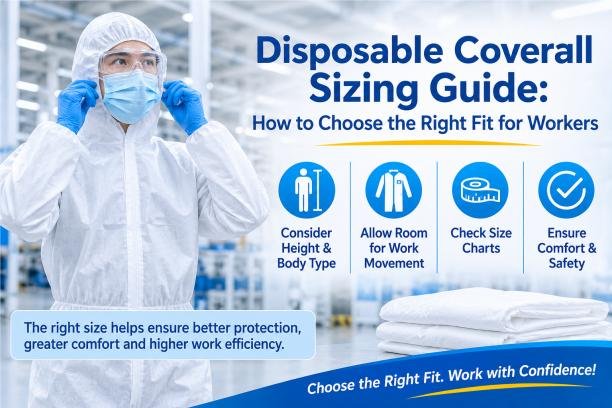
Choosing the right size of disposable coveralls is an important part of workplace safety and employee comfort. A coverall that is too tight may restrict movement or place stress on seams, while one that is too loose can interfere with daily tasks and make protective clothing harder to manage.
For importers, wholesalers, distributors, and workplace PPE buyers, understanding disposable coverall sizing is also essential when placing bulk orders. Selecting the right size range helps businesses meet the needs of different workers and maintain a more consistent supply.
This guide explains what to consider when choosing disposable coverall sizes, how to check fit, and what buyers should confirm before ordering.
1. Why Does Disposable Coverall Sizing Matter?
Disposable coveralls are designed to provide protective clothing for workers in environments where dust, dirt, splashes, or other workplace contaminants may be present. However, the garment must fit properly to support its intended function.
Correct sizing offers several practical benefits:
- Better freedom of movement: Workers can bend, stretch, walk, and perform routine tasks more comfortably.
- Reduced stress on seams: Appropriate sizing helps prevent unnecessary pulling around the shoulders, knees, elbows, and crotch.
- Improved wearing comfort: Sufficient room makes it easier to wear the coverall over suitable work clothing.
- More practical workplace use: A suitable fit helps reduce adjustments during work and supports consistent garment use.
- Better coverage: Correct garment length and proportions help the coverall cover the intended areas of the body.
It is important to remember that the right size is not simply the largest available option. The goal is to achieve a comfortable fit that supports the required protective function without creating unnecessary excess material.
2. Consider Height, Body Shape, and Clothing Layers
Height is one of the first factors to consider when selecting disposable coveralls, but it should not be the only measurement used. Two workers with the same height may have different body proportions and require different garment sizes.
Height and Garment Length
Workers need sufficient length through the torso, sleeves, and legs. If a coverall is too short, the fabric may pull when the wearer raises their arms, bends down, or squats. This can create discomfort and place additional pressure on seams and closures.
A garment that is excessively long may also interfere with movement, particularly around the ankles and feet.
Body Shape and Fit
Chest, waist, hip, shoulder, and leg proportions can all affect how a coverall fits. Buyers should consider the body shapes of their intended users rather than relying on height alone.
For workplaces with a diverse workforce, offering a broader size range can make bulk purchasing more practical.
Clothing Worn Underneath
Disposable coveralls are often worn over everyday workwear, uniforms, or other suitable clothing. The amount of room required depends on the clothing layers and the working environment.
When selecting sizes, consider what employees will wear underneath the coverall. A size that fits over light clothing may feel restrictive when workers wear thicker uniforms or additional layers.
3. Allow Enough Room for Workplace Movement
A disposable coverall should allow workers to complete their normal tasks without excessive pulling or restriction. This is especially important in jobs that involve frequent bending, reaching, kneeling, lifting, or walking.
During a fit assessment, pay attention to these areas:
- Shoulders and arms: Check whether workers can raise and extend their arms without the garment pulling tightly.
- Chest and torso: Make sure there is enough room for comfortable breathing and normal upper-body movement.
- Waist and hips: Check for excessive tension when bending, sitting, or turning.
- Knees and legs: Confirm that the fabric allows comfortable squatting, kneeling, and walking.
- Back and crotch: Look for pulling or tightness when workers bend forward or stretch.
- Sleeves and ankles: Ensure the garment provides suitable coverage without interfering with other protective equipment.
For buyers sourcing disposable coveralls for physically demanding work, it is particularly useful to test the garment during representative work movements rather than evaluating fit only while standing still.
4. Check the Manufacturer’s Disposable Coverall Size Chart
Size labels such as M, L, XL, and XXL are useful references, but they are not always consistent across manufacturers. Different garment designs, patterns, and production specifications may result in different measurements for the same labeled size.
For this reason, buyers should request the manufacturer’s actual size chart before confirming an order.
Important measurements to review include:
- Recommended wearer height
- Chest measurement
- Garment length
- Sleeve length
- Waist and hip measurements, where provided
- Leg length and overall garment proportions
It is also important to distinguish between body measurements and garment measurements. A garment measurement describes the clothing itself, while a body measurement describes the person wearing it. They should not be treated as interchangeable.
If the manufacturer’s size chart does not provide enough information, buyers can request a measurement sheet or sample before placing a large order.
5. Consider the Coverall Material and Design
Material and garment construction can influence how a disposable coverall feels and fits. Buyers should consider these details alongside the size label.
Fabric Characteristics
Different nonwoven materials have different structures, flexibility, and wearing characteristics. For example, microporous coveralls are commonly selected for applications requiring a balance of particulate protection and liquid splash resistance, subject to the garment’s tested performance and intended use.
Material choice should be based on the workplace hazard assessment and the protection requirements of the task, not on size alone.
Garment Design Details
Design features can also affect the overall wearing experience:
- Elasticated cuffs and ankles can help the garment fit around the wrists and lower legs.
- An elasticated waist, where included, can influence how the garment sits on the body.
- Hood design should provide suitable coverage and compatibility with other required PPE.
- Zipper length and front closure design can affect ease of dressing and removal.
- Seam construction and reinforcement details should be checked against the intended application.
Buyers can review our Microporous Coverall product information to learn more about one of the disposable protective clothing options available for industrial applications.
6. How to Choose Sizes for Bulk Orders
For distributors, wholesalers, and industrial buyers, selecting disposable coverall sizes for a large workforce requires more planning than choosing a size for one individual.
The following steps can help make bulk purchasing more efficient.
Step 1: Understand the End Users
Identify the industries, job roles, and workforce characteristics of the intended users. Different workplaces may have different clothing requirements and preferred size distributions.
Step 2: Review the Available Size Range
Confirm which sizes the manufacturer can supply. For example, HXProtective offers disposable protective clothing with size options that can include M–4XL, depending on the product and order specifications.
Step 3: Request Samples
When possible, request samples in several sizes and arrange a fit assessment with representative users. This is a practical way to identify sizing differences before committing to a large order.
Step 4: Plan the Size Distribution
Estimate the quantities required for each size based on workforce information, previous purchasing records, or customer demand. Avoid assuming that every order will follow the same size distribution.
Step 5: Confirm Packaging and Labeling
Before production or shipment, confirm individual packaging, size identification, carton quantities, and labeling requirements. Clear size identification can help distributors and end users manage inventory more easily.
7. Common Disposable Coverall Sizing Mistakes to Avoid
Even experienced buyers can encounter sizing problems when product measurements are not checked carefully. Here are some common mistakes to avoid:
- Choosing by size label alone: Always review the manufacturer’s measurement chart rather than assuming all XL or XXL garments have the same dimensions.
- Ignoring clothing layers: Consider whether employees will wear uniforms or additional clothing underneath.
- Overlooking movement requirements: A coverall may appear suitable while standing but become restrictive during bending or reaching.
- Ordering without sample evaluation: Samples can help identify fit issues before a large shipment is placed.
- Offering too narrow a size range: A limited selection may not accommodate the full workforce or customer base.
- Confusing a loose fit with better protection: Excessive fabric can create practical problems and does not automatically improve protection.
Good sizing decisions should always consider the garment’s intended protective function, the manufacturer’s specifications, and the actual working conditions.
8. Work with a Disposable Coverall Manufacturer That Understands Your Requirements
For international buyers, choosing a supplier involves more than comparing product prices. Consistent sizing information, reliable product specifications, sample availability, and clear communication are also important.
When evaluating a disposable coverall manufacturer, consider the following:
- Whether a detailed size chart is available.
- Whether multiple sizes can be supplied for different user requirements.
- Whether product samples are available for evaluation.
- Whether packaging and labeling can meet your market requirements.
- Whether OEM and ODM customization options are available.
- Whether product specifications and quality requirements can be clearly confirmed before production.
HXSafetyWear supplies disposable protective clothing for industrial and workplace applications. With available size options that can include M–4XL and OEM/ODM customization support, we work with international buyers to discuss product specifications and sourcing requirements.
If you are sourcing disposable coveralls for distribution or workplace use, our team can help you review available sizes, product details, and order requirements.
Need Disposable Coveralls in Multiple Sizes?
Contact HXSafetyWear to discuss your disposable coverall requirements, available size options, samples, and OEM/ODM inquiries.
Email: vera@hxsafetywear
Website: www.hxsafetywear.com
Frequently Asked Questions
1. How do I choose the correct size of disposable coveralls?
Start by checking the manufacturer’s size chart, including recommended wearer height and garment measurements. Consider body shape, clothing worn underneath, and the movements required for the job. When possible, evaluate samples before ordering in bulk.
2. Should disposable coveralls fit tightly or loosely?
Disposable coveralls should provide a comfortable fit with enough room for normal workplace movement. They should not be so tight that they restrict movement or place excessive stress on seams, and they should not be excessively loose in a way that interferes with work or required PPE compatibility.
3. Are disposable coverall sizes standardized?
Not necessarily. Size labels and garment measurements can vary between manufacturers and product designs. Buyers should always compare the actual size chart and confirm measurements before placing an order.
4. What sizes are commonly available for disposable coveralls?
Available sizes depend on the manufacturer and product model. Some suppliers offer options ranging from M to 4XL. Buyers should confirm the available size range and measurements for the specific garment they intend to purchase.
5. Should I request samples before placing a bulk order?
Yes, requesting samples is a practical way to evaluate garment dimensions, fit, material, and construction. Testing samples with representative users can help reduce sizing problems in larger orders.
6. Can disposable coverall sizes and specifications be customized?
Customization options depend on the manufacturer, product design, and order requirements. Buyers can discuss available size specifications, packaging, labeling, and OEM/ODM options with the supplier before confirming an order.